Nibe Cock up
The Saga of NIBE Fighter 1140
This is a complaint to the M.D. of NIBE. Iso-Energy are the party that we are contracted to but whom we do not want to take to Court as they have been so helpful right from the start. I would this “letter” ie the link to this website it to be sent by them to the MD of NIBE for consideration.
Background
This machine was bought from Iso-Energy in mid 2007 and installed in very late 2007 / early 2008 (and has yet to be ‘balanced’ in a final commissioning) but has been functioning intermittently for the last three years. It is situated in a holiday home and gets intermittent use at holiday times such as Easter, Christmas, New Year and from July to October on various holiday weeks. It has run for less than 800 hours from Jan 2008 to March 2011, at a rate of 265 hours a year or 5 hours a week! The main use is for DHW in late July, August and early September and for heating in the winter. When not in use it is switched off. I have yet to fit the remote controller bought for it, as when I costed out computer electricity costs, it was not worth running it from a computer as the cost of running the computer for long periods when away was inefficient. The installation design was a combination of my own efforts from first principles and a firm called EngDesign who, together with Iso-Energy, produced the layout and detailed design criteria. During the installation process, we were advised by Neil Lawson on our proposed installation layout with respect to the buffer tank on the DHW production who, on behalf of Iso, confirmed that it met with the approval of NIBE. At his insistence, we installed an extra buffer cylinder for the domestic hot water system and this appears to have been a success. There were no problems at the time of installation with respect to the hardware. We first ran it in about Jan or Feb 2008 – the exact date I did not record (but I can find out by enquiry of those that were there). For all the various photos in a group see the collection of photos in this linked page
Logs
Past logs were recorded and show the following failures:
December 2008
2008 12 27 1353 (This was a Saturday) 2008 12 27 1410 Alarm Type 19 (Sensor Fault UG) 2008 12 27 14 42 Alarm Type 5 (incorrect phase sequence) [Note it is single phase] Re- Alarm Type 19 (this says ‘UG’ but I cannot see what UG means (on pages 57 to 60 of the manual) despite a good long look. As it coincides with the date I went up to Rhoscolyn for the New Year, I suspect it appertains to the failure of the weather stat sensor – please advise.) I have the recordings for the various readings contemporaneously noted and can provide these by means of an appropriate table, which can be provided if needed. For example, on this particular failure the readings were: Brine in 6.0 Brine out 4.8 Out door —— Flow 17.8 |Return 48.8 HWT 51.7 HGT 92.5 Compr time 23 mins Relay 1-8 0 Relay 9-14 0 Ex in 0 Off reset off The last four are difficult to read and may make no sense as I scribbled them down rather hastily with no proper id (see scan of contemporaneous note).
‘Log failure’ February 2008
2008 02 28 1434 Alarm Type 1 (HP Alarm) [This is the high pressure switch tripped and the compressor was blocked and switched to Winter mode – no cause for this could be determined and switching it on and off appeared to fix it as I have no record of taking any other action)
‘Log failure’ No. 4 March 2008
2008 03 21 1218 Alarm Type not recorded I do not know but some time in this year or possibly 2009, there was a phase failure which required resetting. For the life of me, I cannot recall if I am muddling up this with the later call in September 2010 to Nibe.
‘Log failure’ No. 5 September 2010
2010 09 03 02 42 Alarm Type 5 (incorrect ‘phase’ sequence) [Note it is single phase]
‘Log failure’ No. 6 September 2010
Compressor ‘failure’
Defect No. 1 Weather stat sensor failure
December 2008
The first defect occurred in about Dec. 2008, probably the 27th December, when the weather stat sensor failed and had to be replaced. I only discovered this when I came up to the house for New Year and found the heat pump not working properly. Not a good time! Fortunately, Justin (of Iso) had given me some spare sensors at the time I collected the vegetable oil glycol in the summer of 2007 and I was able to call in my electrician, Carl Anson, who was able to test this ‘replacement’ sensor (for conformity of temperature range). Despite it being a different colour, black instead of the ‘original’ white, it was found to be correct and was installed. It was necessary to dismantle a considerable length of trunking, which unfortunately, was behind some shelving, with stored items on, in order to replace the wires to the sensor. I let the matter rest rather than complain at time to Iso-energy on the basis that Justin had given me a good deal and had been incredibly cooperative and my electrician had come up with what appeared to be an effective solution and one that has lasted perfectly well ever since. The costs associated with this repair shall be provided on a spreadsheet in due course.
Defect No. 2 “Brine Out” sensor March/April 2009
See this photograph below showing the read out indicating failed sensor reading 60.5 C 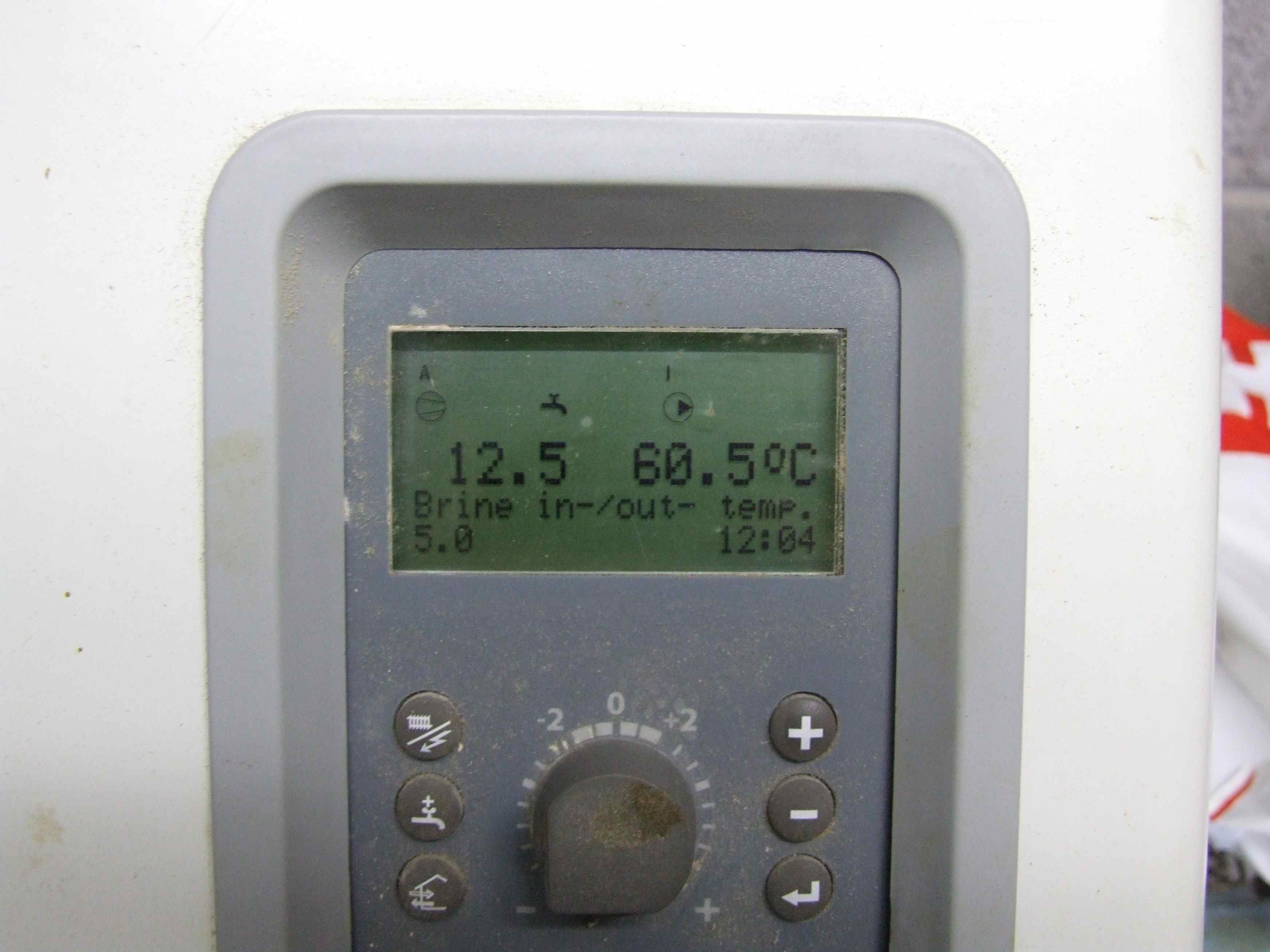 The next problem occurred about six months’ later in March/April 2009 when another sensor , this time one for the “Brine Out” temperature of the glycol collector. See the photograph above. Of course, this did not stop the machine from working but it did cause me some concern and, at a later date, I called in Carl Anson to replace it when he was sorting out a later problem on this machine. (In order to do so, it was necessary to cut into the insulation surrounding the return collector pipe and to install the new sensor in the conductive “silicone” gel. [Note: the positioning and attachment of such sensors leaves a lot to be desired in design terms and I can make suggestions to improve this.] Photograph, DSCF 6527, taken at a later date, showing cut insulation, cable tie repair and traces of white ‘silicone’.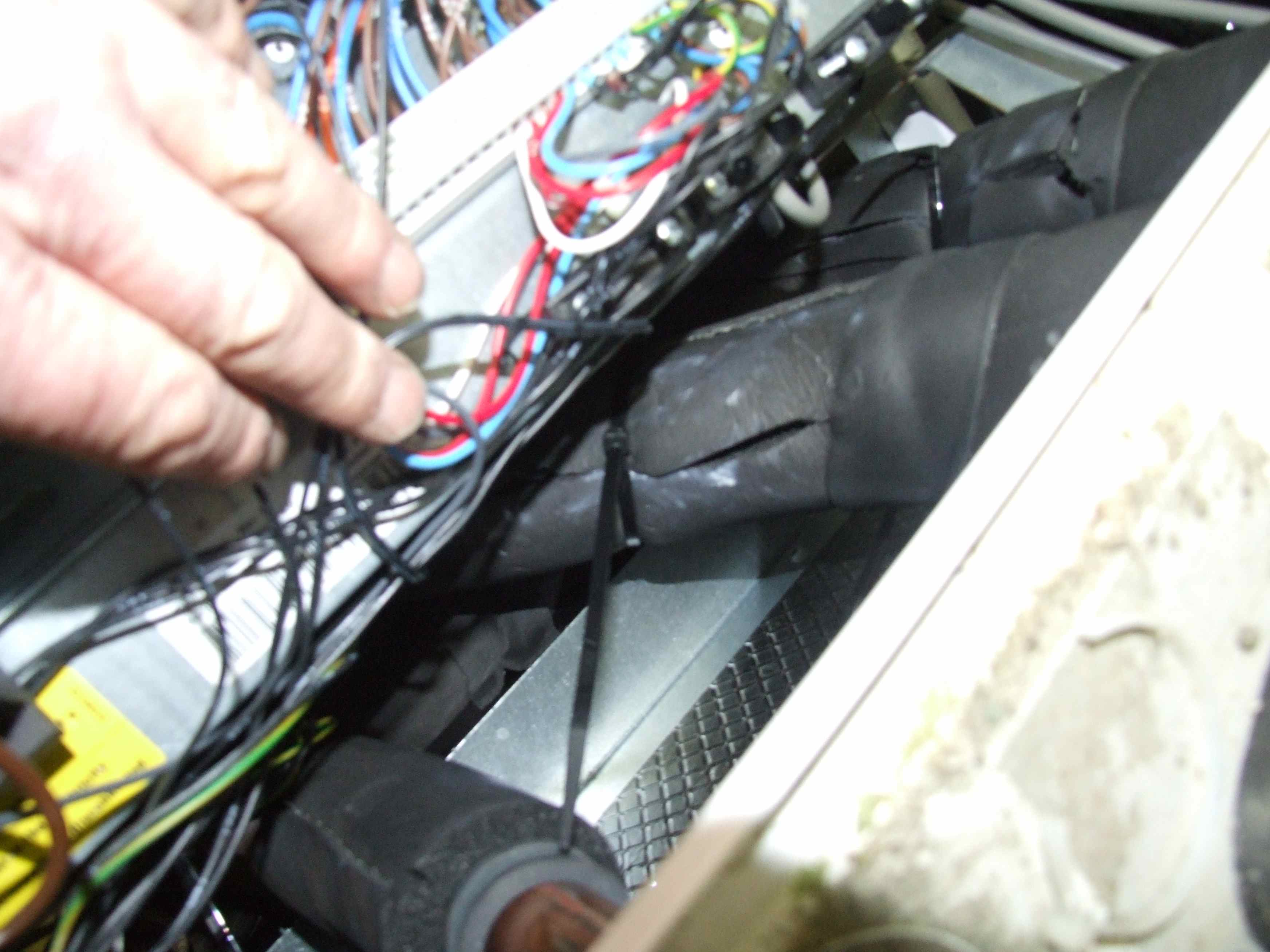
Defect No. 3 “Compressor Failure” (note that this was, in fact, a wiring failure which burnt out) March/April 2009
The next problem in this saga was the compressor not working! The fault had occurred in early August when we had just started three series of lettings and the holiday tenant for the first week complained that the shower water was cold and the water was not getting hot. I got him to try and identify the problem but, as he was paying for the rent of the house, did not want to get him too involved in the technicalities. Basically, the NIBE was switching on but the compressor was not working and the hot water temp was only 20.5 C! I told him, and the next two lets, simply to use the two 1.5 Kw immersion heaters instead of the Heat Pump to heat up the DWH as there was no need for CH and went up there in early September, (the 3rd September according to my telephone record to Neil Lawson) to fix it myself. I could not work out what was wrong and rang Neil Lawson at his new office in Brackley. The chaps, at Iso, also could not sort it out and at their suggestion, I got onto NIBE direct in the person of Andy Wildey on or about 1300 hours on Frday 3rd September 2010. It took me some numerous calls to a Mr Bob Sulliman, a lady called Alison, and odd calls over a 5 hour period (times noted) up until 1800 hours and it was only on the Monday at after calls to him starting at 0900 that eventually, at 10.56 hours, that ‘Andy’ rang back. He was a breath of fresh air when he did ring back and my notes, (of which I am happy to provide a scanned copy, show he worked with ‘the motor protection’ set for the quick start compressor. We worked at it for some time and without success. Eventually, we gave up and agreed to sleep on it. The next morning I, on my own initiative, reverted to basics checked every single fuse and every single wire from the electricity supply switchboard into the machine and to the compressor. During this process, I noted something that I had not seen before, namely, a burnt out cable connector set of which I have appended photographs. The key photos are below. IMG_1769.jpg 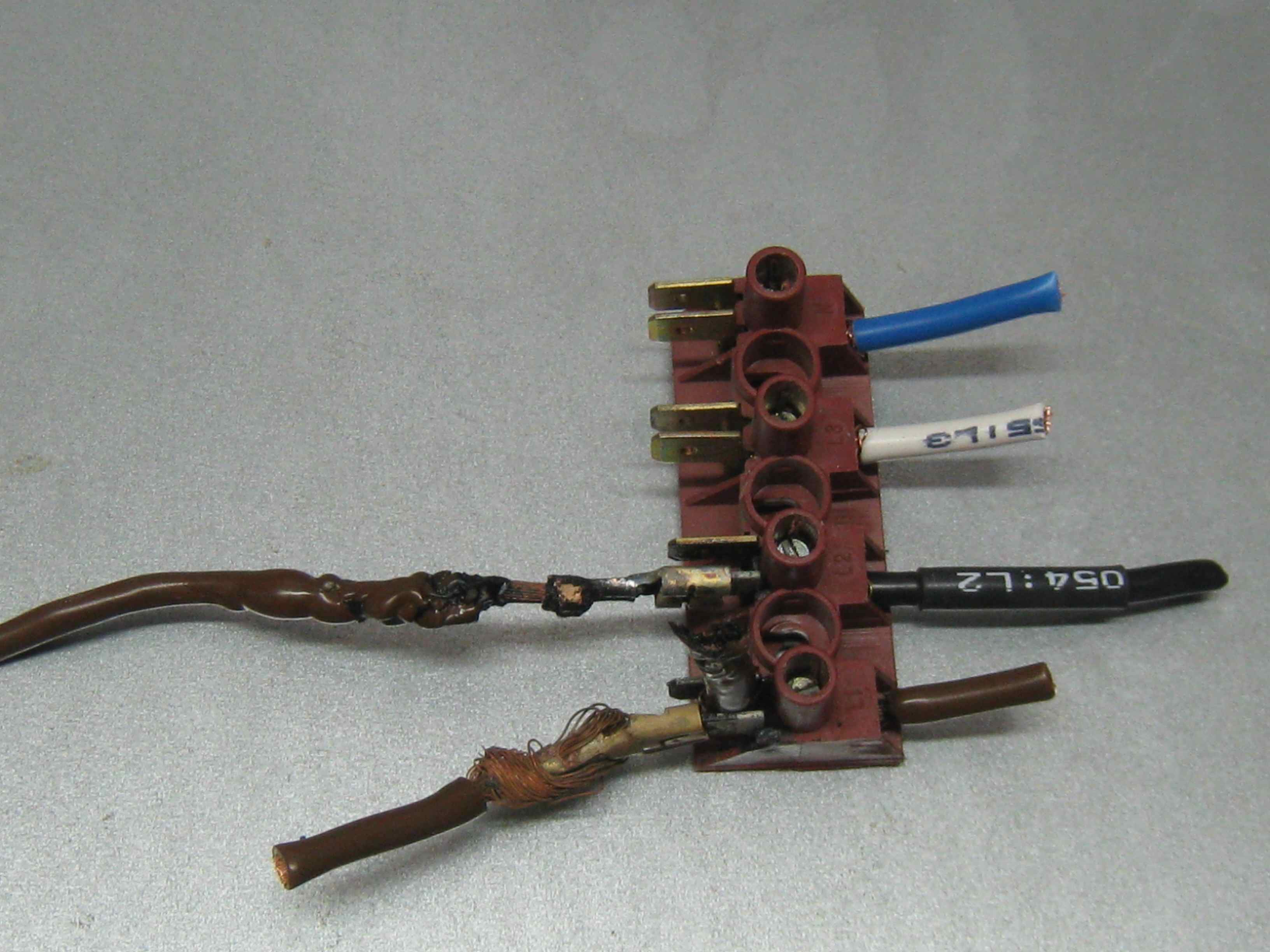 View of view of defective wired connector set reassembled for the photograph with the bottom left wire that was completely burned out on bottom left side. Note temporary “repair” of bottom left wire, which I wrapped round the remains of the connector to test it and get the machine going before the electrician came properly to fix it. Note also, the partially burned but functional, second brown wire above which also had to be replaced. IMG_1762.jpg
 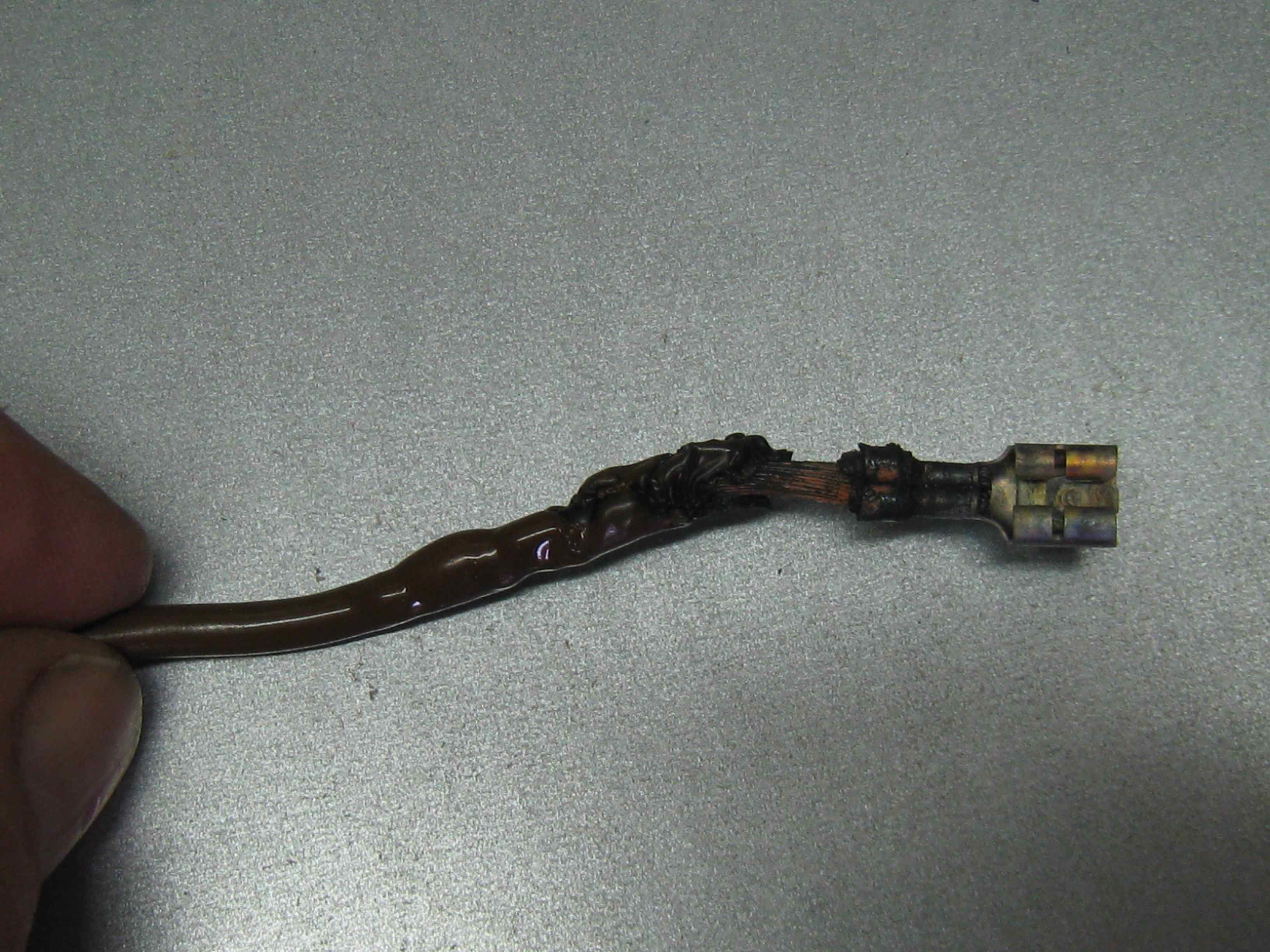 Closer view of the second from bottom left wire. The ‘nature’ of this burnout was such that ‘some’ of the current was operative but not fully functional! A picture, with comments, is below. IMG_1762.jpg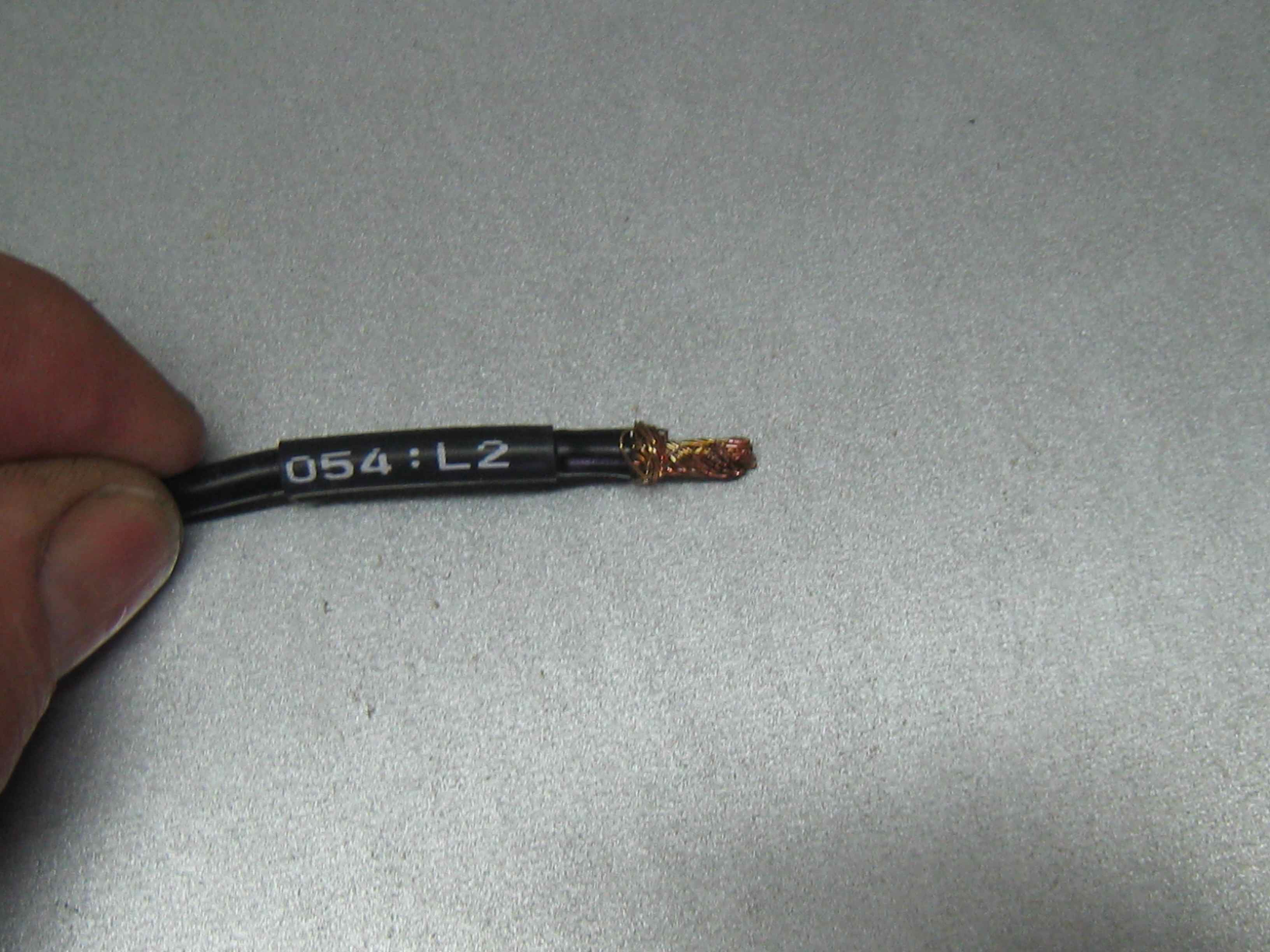
 IMG_1762.jpg Look at white and black wires and their defective connections with many copper strands bunched up indicating they had been pushed in with the screw connector half closed and were not part of the connection. I am informed by my electrician, who subsequently inspected it, that the manufacturer who wired up this internal component of the machine in the first place did not do this in a manner fit for purpose and in accordance with good practice. Expert Opinion Absent a satisfactory offer from NIBE, I shall commission a Part 35 C P Rules Expert Opinion from Mr. Carl Anson as to the precise nature of how the wires should have been inserted in the screw clamps and what the manufacturer has done wrongly. Needless to say, the explanation for the ‘failure’ of the compressor to work was this burnt out connector block and wires where one wire was working and one was not! I carried out a temporary repair and then commissioned Mr. Anson, to carry out a proper electrical repair a couple of days later and will in due course advise his costs, to which I add the costs for the two installation of the two sensors and suggest that NIBE offer some form of ex gratia payment. IMG_1768.jpg
 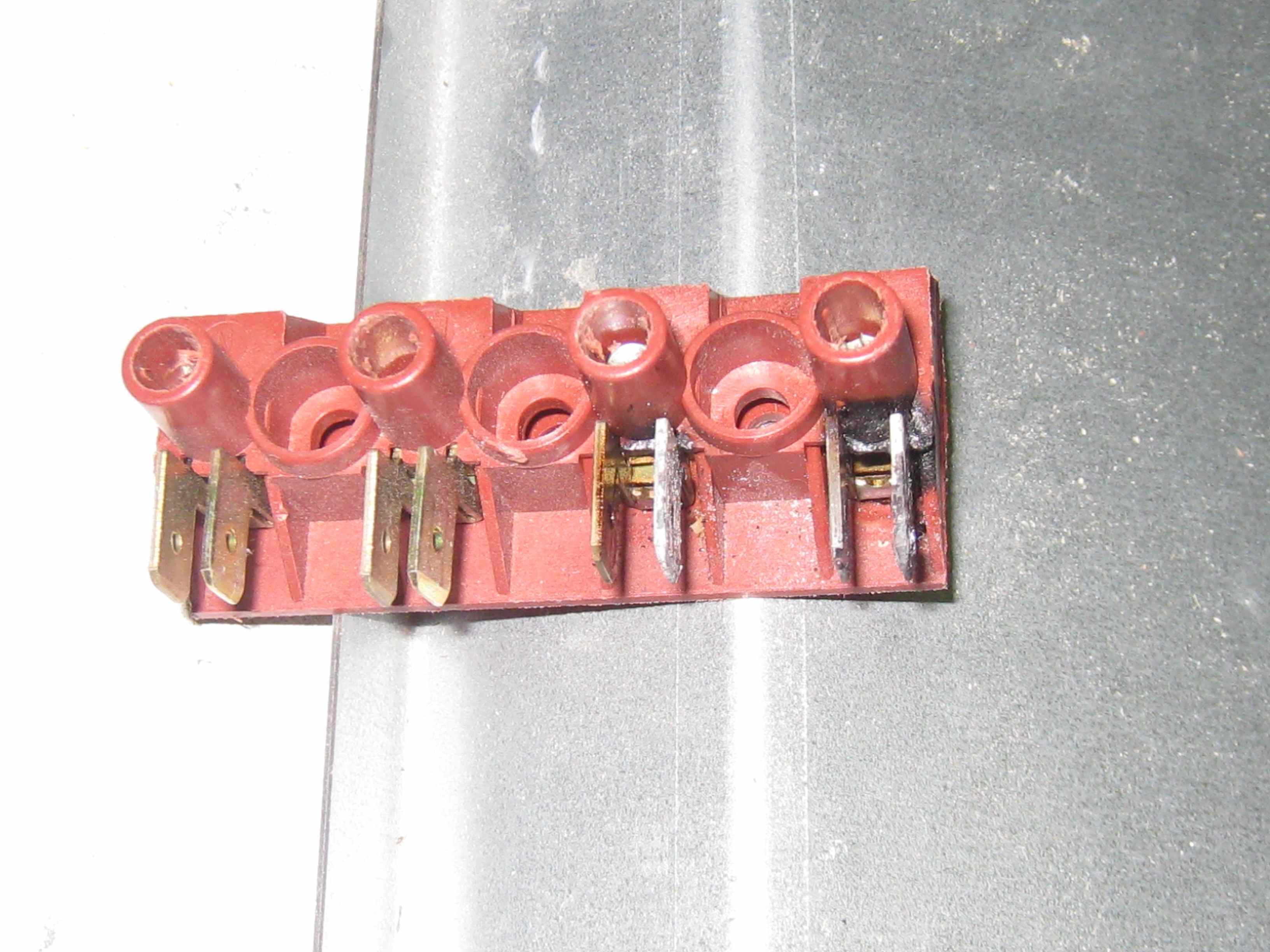 Connector block with burnt out spades The Repair DSCF6629.JPG
 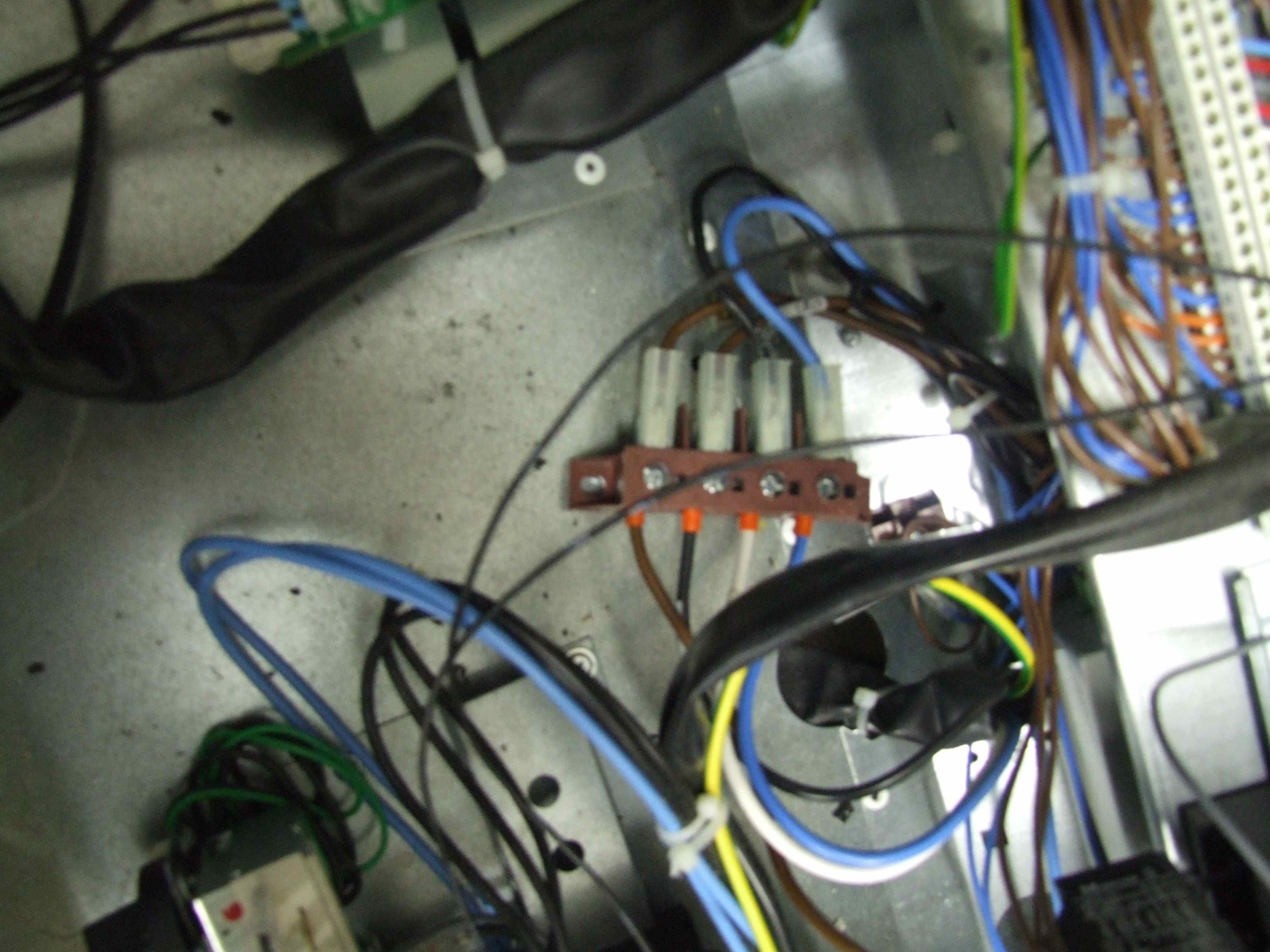 View of new connector block and replaced cut off wires.
Defect No. 5
(Alarm Number 17 with the date of 23rd December 2010 after I had had it switched on for the first time since 17th September 2010.) December 24 2010. “Hot Gas Sensor” Alarm (but found out later not to be a correct alarm! Even NIBE’s alarm systems do not work! This faulty alarm caused the totally unnecessary replacement of the hot gas sensor with consequent costs)’. Three months later, on December 24th 2010, in 6 inches of deep snow, the ideal conditions for the heat pump to demonstrate its effectiveness and COP and start to save me money, I came up to Rhoscolyn for Christmas, only to find that the house was very cold, the domestic hot water was cold and, although the pump was ‘running’ and circulating water throughout the ground floor under floor heating, the hot gas sensor alarm was indicating an alarm and the compressor was not working. Okay, I said to myself, roll your sleeves up and swap over the hot gas sensor with one of the ones sent up by NIBE in September! At this point, my other half, who has always been sceptical about the heat pump, cited all the previous occasions on which this machine had failed both tenants and ourselves on the many occasions and said it is time to change back to gas central heating! Now I’m not normally one to have defeatist thoughts but there was not a single argument that I could rationally place in front of her! Nevertheless, it was Christmas Eve, and I endeavoured to take the heat pump sufficiently apart to gain access to hot gas sensor (part number 110 on the diagram on page 65). I have worked on British motor bikes, French and Italian cars, Vespa and Lambretta scooters and, quite frankly, I have yet to see a more cack-handed, incompetent access system than that enclosing the compressors of the NIBE heat pump and the access and set up of the sensors within the machine. It beats even the rear nut access to the alternator on a Renault Espace! Enough! If Nibe are sensible enough to accommodate and settle with me, I shall write a separate report to this letter (on pro bono indemnified terms) as to how the design this machine can be improved so as to overcome the access and repair problems that I have experienced with this particular machine, in the hope that NIBE will appreciate this cerebral effort and, with a bit of luck, will incorporate my suggestions into this andtheir future machines. With even more luck, they will show their appreciation of these improvements by taking away this rogue machine and providing me with a suitably modified, new machine in which my other half and I might have a modicum of confidence for the future. I called my electrician Carl, and he, with not a little difficulty, replaced the “hot gas” sensor. This involved snipping the two wires at a convenient location and soldering on the slightly shorter sensor wires, which Nibe had given me as a spare back in September. Huge effort to get cover out after undoing the worst-designed 4 BA screw fixings known to man in the most impossibly difficult locations and with the self-tappers fixed not only to the receptor metal but also in the cover plate metal – not good engineering – and very unsympathetic. The saga continues…. With an appropriately soldered wire and heat-shrunk insulation, I thought all is well and we restarted the machine. We fully expected everything to go hunky-dory. No such luck! Exactly the same error alarm showed. At this point, I phoned the Iso emergency number and got hold of Justin’s son, and then Justin, who then gave me the telephone number for Peter Konowalcxyk. After considerable effort and various tests, we established that both the replacement sensor and the original sensors were working, that it had not been necessary to replace the hot gas sensor and that the fault was elsewhere. Both he and Carl Anson said it was likely to be in the printed circuit board (PCB)! A test was done on the two terminals of the PCB connecting the working sensor to these terminals only to find a series of “——-“ for the reading for hot gas. From these it was concluded that it was probable that the PCB was defective. It was Christmas Eve, I had already disturbed Peter on his Polish “Christmas” dinner (which they celebrate on Christmas Eve) and I called it a day. We purchased two 47 kg gas cylinders and connected up the gas boiler to the buffer tank in order to get ourselves warm in the house with the under-floor heating and used, once again, the immersion heaters for the domestic hot water. I have kept a record of the gas used and the electricity used and shall be grateful for compensation from NIBE for these and my previous extra costs if they should be so kind as to consider this as an ex-gratia offer of some sort. Peter Konowalczyk, who is a credit to Iso and cannot be faulted, sent the replacement PCB on the morning of the 29th – the first working day after the holiday. I asked my sons to set up a Skype connection to the boiler room / garage (an integral part of the house shown in the photographs) which involved taking the router and connecting it in the garage as the WIFI was not good enough for Skype. The plan was to have both Peter and I in contact via a Skype connection so we could both see and advice on the replacement. I stayed in all day to do this and, needless to say, the post office RMSD did not actually get delivered the next day. So it was the 31st at about 12.30 that it arrived. Peter should now ask for his money back from the Post Office and I will also be adding a bill for my wasted time for them to consider with it – not much chance but worth a try! On the 31st my elder son rang Peter and was told to get down on paper all the information on the card wrt settings which he did. A copy is available should it be wanted. My son then got rid of any static on his person as instructed and changed over the card. Apart from the problem with the ‘Hotwatertemperature’ connection, which did not work initially, the machine fired up and appeared to be working according to him. After some cogitation by my son he re-checked and cleaned the connector to the card for the Hotwatertemperature connection and got the 1.0 control panel working. He spent some 5 hours in working on this. I spent most of the 24th December taking the machine to bits and renewing the sensor and trying to work out what was the problem – from about 12 noon to 5 pm. Ancillary costs are itemised in an appended document.
Defect No. 6 connector to PCB March 2011
This was simple and was manifest in March 2011. The machine appeared to be working in all respects except the water was not getting hot. I called in Carl yet again and spent hours on it, testing everything. To cut a long story short my son had put the PCB wires laterally placed on 13 and 14 instead of 12 /13 (or similar). This problem would never have occurred if either the PCB had not failed after such a short working time (under 800 hours in 3 years) or if NIBE or Iso had sent a technician to do this under warranty. It was, however, not a fault that can be attributed to NIBE but a consequential effect and thus loss. It will be costed separately.
Summary
There have been four major (and many minor) failures of this machine in the first 790 odd hours of its use, which has resulted in considerable consequential losses. In all of the four cases the failure was in hardware – a physical component. Firstly, a weather stat sensor Secondly, a brine sensor Thirdly an electrical connector for the mains, which burned out and this was pretty serious Then, a printed circuit board This is simply not acceptable. My out of pocket losses are some £1,100 for the electrician and £400 for fuel supplementary costs – the difference between the heat pump cost and having to use gas and immersion heaters on two winter and one summer holidays. My personal time on holiday losses is probably about 7 working days and uncounted stress. It has taken a further couple of days plus to dictate and write this website. Suggested remedy for NIBE (not Iso Energy as I consider these faults to be a manufacturing defect)
Option 1 Replace the machine and its internet interface with a more reliable modern machine that has better quality sensors and computers. In a spirit of compromise I would be prepared to fund the cost of the actual change over myself or more likely do it myself but NIBE would have to deliver the new and collect the old machine.
Option 2 Nibe to send an engineer up to change every single sensor in the machine and to agree with me and pay for the execution of adaptions to the existing machine so that I can achieve easy access to all parts that have gone wrong or are likely to go wrong and for NIBE to supply FOC all spare parts for all such parts for the next 5 years. Note; NIBE may like to see my suggested modification for this, which NIBE may find useful. Additionally, NIBE as an ex-gratia gesture to cover my out of pocket costs to date with the electrician and extra bills and chuck in some £1,120 (my loss of holiday time) goodwill compensation for my inordinate time and lack of holiday and stress on three occasions as particularised.
Chris George
The result
On the 29th August 2012, following an offer (after some phone calls and emails) from from Mary Wilson of NIBE who said she was acting as PA to the MD of NIBE on behalf of the service department of NIBE UK, a team headed by Chris Easton, the top service engineer at NIBE called in with a colleague and spent a happy day at Bryn Siriol. Inter alia, what was done was the following: determined that the Hot Gas sensor “fault” was not the Hot Gas sensor but the Central Processor Unit (CPU) board. The CPU printed circuit board was therefore replaced, (this was for the third time since the machine was installed – twice supplied by Peter K of Iso and then this August 2012!), all the suspect and defective sensors supplied with the original new machine were replaced with NIBE PT1000 sensors, the hot water operation tested, the buffer CH tank sensor pushed in and finally they changed the differential flow and return on the hot water some 5 to 10 C (not sure what precisely they did but that is what is in my notes!)
All went well for 364 days (Yes! just under a year!) until …. I had to write this email to Mary Wilson..
Dear Mary and Chris
Find a trail from last year below as a reminder of who I am!
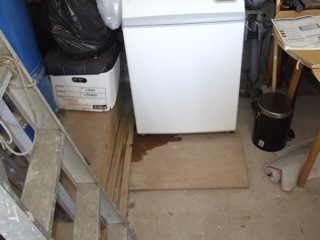
Sadly, I have to report that the fighter has “sprung a small leak”. This is manifest in the photograph below
I deduced initially as there was a trail from a relief or air valve down to the floor that it was some form of expansion but with hind sight that was wishful thinking. I was hopeful in that the total fluid lost appeared only to be about 250 mm3 / cc or thereabouts.
I noted this in about April 2013 when we were last here.
I have now spent a month or so here and it is clear that there is a very small leak as I have over the last month also lost about a further 250 to 500 cc and have had to top up the cylinder
I have taken off the front and looked for a specific leak but cannot for the life of me find it as the component is covered in insulation.
Questions
I have never pressed you for my damages and losses (circa £1k ) on the basis of how impressed I was that you came and dealt with the problems last time and the quality of your guys but wondered if you would be willing to help with this, another hardware problem
you can either do this remotely by advising me how to do it (if you are willing) or
when it is next convenient and you have a team up this way to come and look at it yourselves
Absent that what do you suggest I do?
Photos below
Leaking on floor below
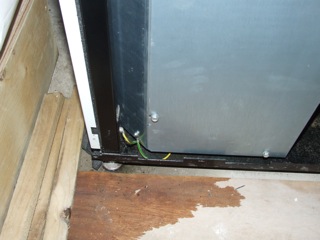
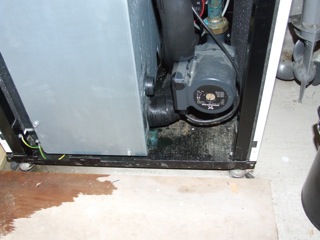
The expansion vessel

The source of the leak

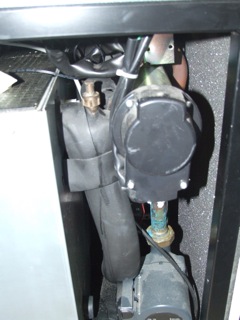
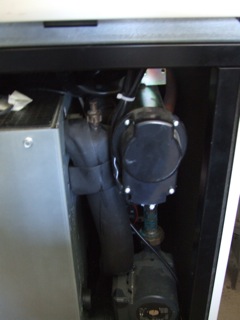
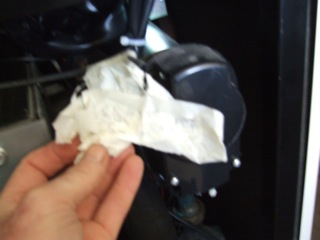
This leak is still very small say 250 to 500 cc since I last used the machine but clearly is not right and is yet another HARDWARE defect. It simply should not happen in a machine which has run for less than 1000 hours…. It needs sorting.
I now turn to this year
Addendum – 17th February 2014!
After last August we have used the machine for about a further week in September then another week in October, another week over New Year and Susanna (Hart) came up last Saturday for a 10 day stay. I got Ann, the next door neighbour carer to turn on the machine which she did at about 1000 hours on Saturday 15th Feb 2014 in order for her to be welcomed into a warm house with domestic HW nice and set up. Come Sat evening when she arrived, the house was dead cold and no hot water. I got a telephone call stating that the NIBE was not working and all it said was “Connecting !!!”. You can imagine my thoughts as I was just about to go out to a 30th Birthday Party but had to deal with this or my life would not be worth living. Well, I looked through the manual and there was no error message “Connecting”. I got her to check all the processes of turning on and off. I even asked her to check the little on off switch at the base of the lid. I left a few messages on the emails for Mary Wilson and Peter K and anyone else I could think of on my list in my little black book. No joy so I slept on it and cogitated.
I persuaded my electrician who had installed the electrics for the machine to come out and visit and he checked the system and could not get it to work. He noted that on the PCB for the relay there was not LED flashing and suspected that board.
On Sunday, after further thought, I looked up all the service agents and found who was the one allocated to LL65 and it was in Birmingham and left a message on his phone. I emailed NIBE. I looked for emergency numbers – there was none. I rang and left messages with Iso energy – no reply so I then cancelled my plans for Sunday and Monday and took a train on the Sunday to Rhoscolyn in order to sort the problem out first thing Monday morning.
Monday 16th Feb 2014. I spent a couple of hours with NIBE and on the machine trying to sort out the problem with Chris Easton who, fortunately was in the office that day. He concluded that the problem was either the display console PCB or the Relay PCB and kindly sent both up by courier from the Stoke spares department. He was brilliant they arrived by 0900 the next day. I paid (yet again) for the electrician Carl to come up and fit the boards which he did on Tuesday
Tuesday 18th Feb 2014
We fitted the relay board first and Lo! and Behold! the red LED started flashing. Great! or so I thought until I looked at the display which, boringly, said “Connecting !!!”
OK last resort – put in the Display (with very little hope) and sure enough the new display also said “Connecting !!!”. Back to the drawing board and speak to Jamie Bailey who advised me (and Carl) in Chris Easton’s absence. Two hours later of phone calls on a mobile at mobile prices (no land line in the garage) from our end he concludes that we need a fourth CPU PCB! Good lad that he is he rang to check that he could get it to us the next day.
Wednesday 18th Feb
Van arrives at 1245 odd hours but with the PCB. I ring Carl for the fourth day on the trot and he comes for the fourth time from the mainland to fit the PCB and, at last, we get a reading on the display and the machine starts to work but of course no settings are saved and it is all at default settings so we spend an hour checking through every setting and changing them to the settings recorded (fortunately by me as a double check) back in 2011 and written down in hard copy.
We then try to get the internet working which he had tried to set up at Christmas without success and did some tests on this RU 10. This is a box of tricks I bought with the machine in 2007 but had not had a chance to set up since I did not really understand how it worked and had read up that you needed a computer to be running all the time which at several hundred watts and without a UPS I was not willing to do but with Susanna retiring and us starting to use Bryn Siriol more (and having paid the best part of £1000 for it) I decided it was time to get it going. No joy! Not a dicky bird out of it so that is now going to get sent back to the NIBE guys to find out what the problem is.
How come these boards are all so labile? How is it possible for damage to occur to components which are switched off and where there is so little use?
Various photos can be downloaded here
 |
DSCF4067_other_settings_8_.jpg Other settings | 231 K |
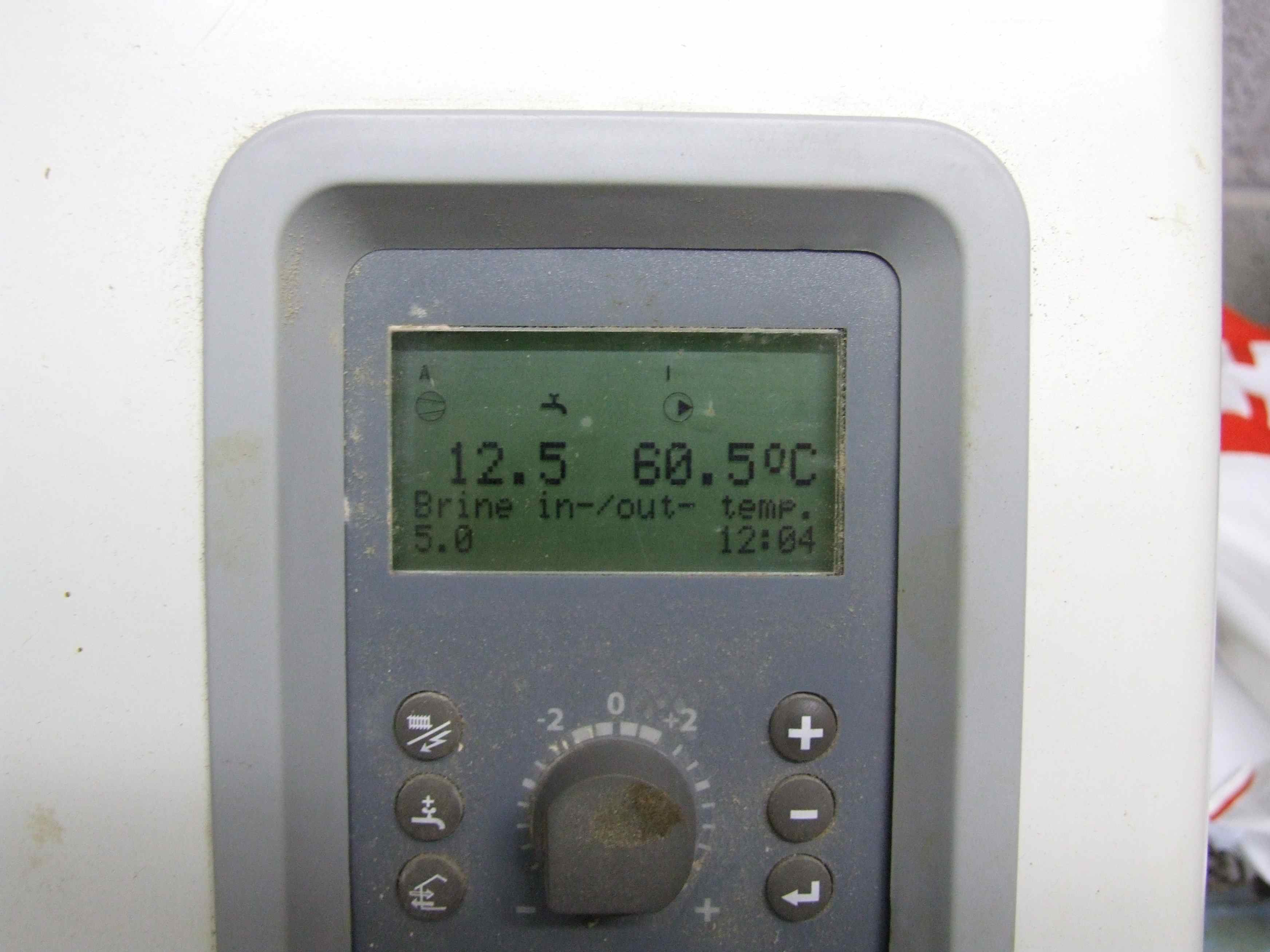 |
DSCF4060_brine_out.jpg Brine out | 293 K |
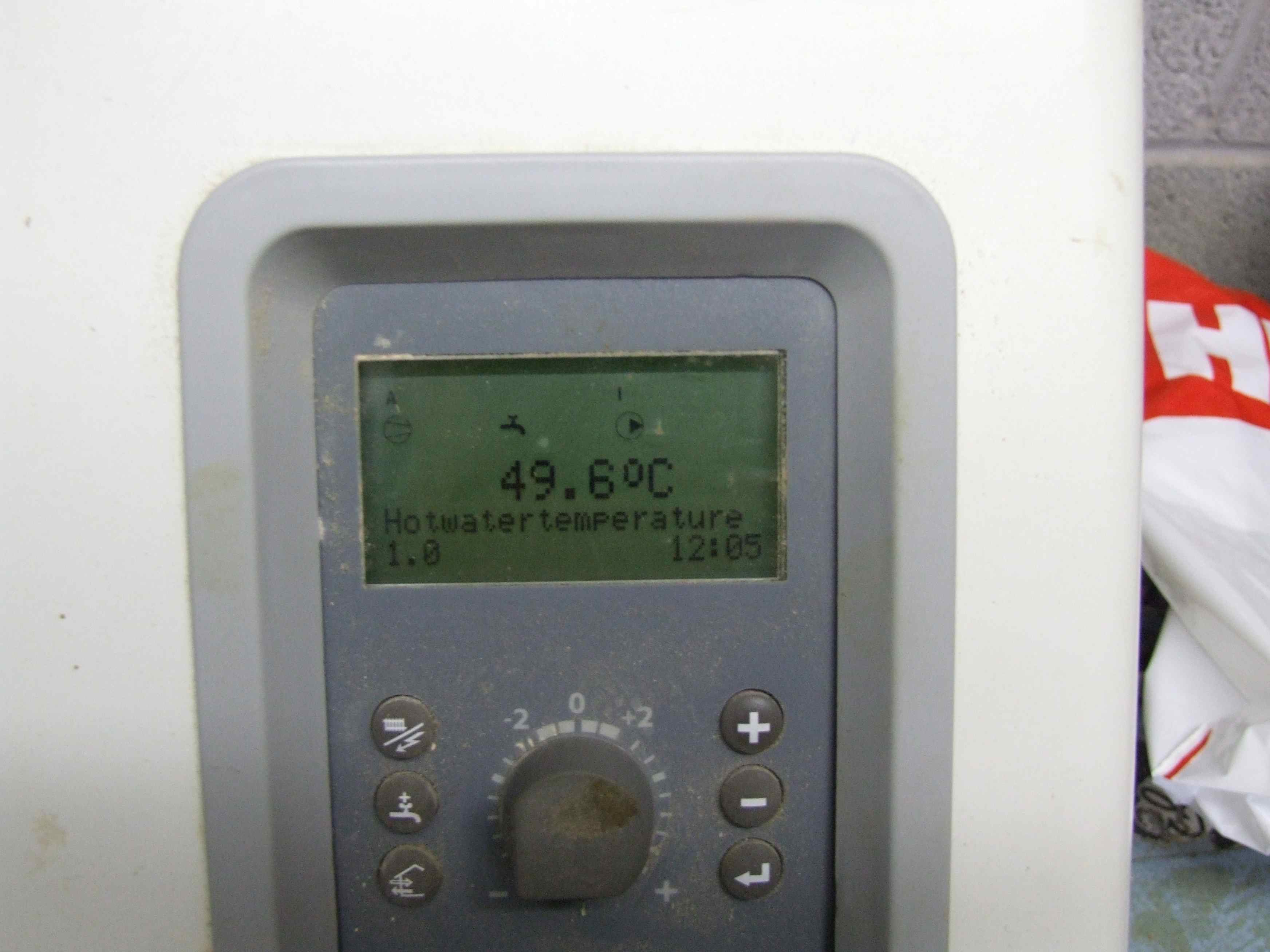 |
DSCF4061_hot_water_temp.jpg Brine out | 272 K |
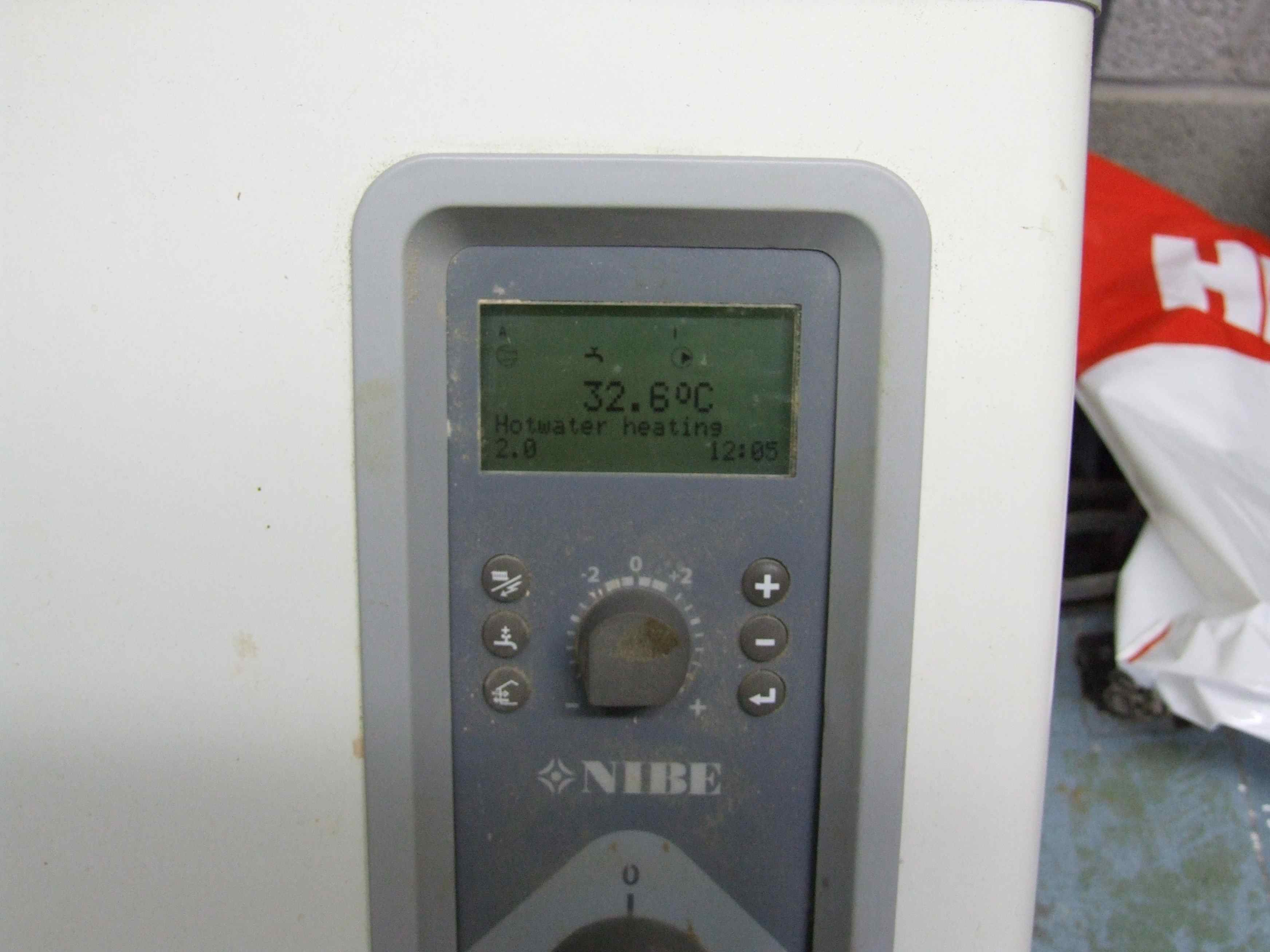 |
DSCF4062_hot_water_heating_2.0_.jpg Hot water temperature | 266 K |
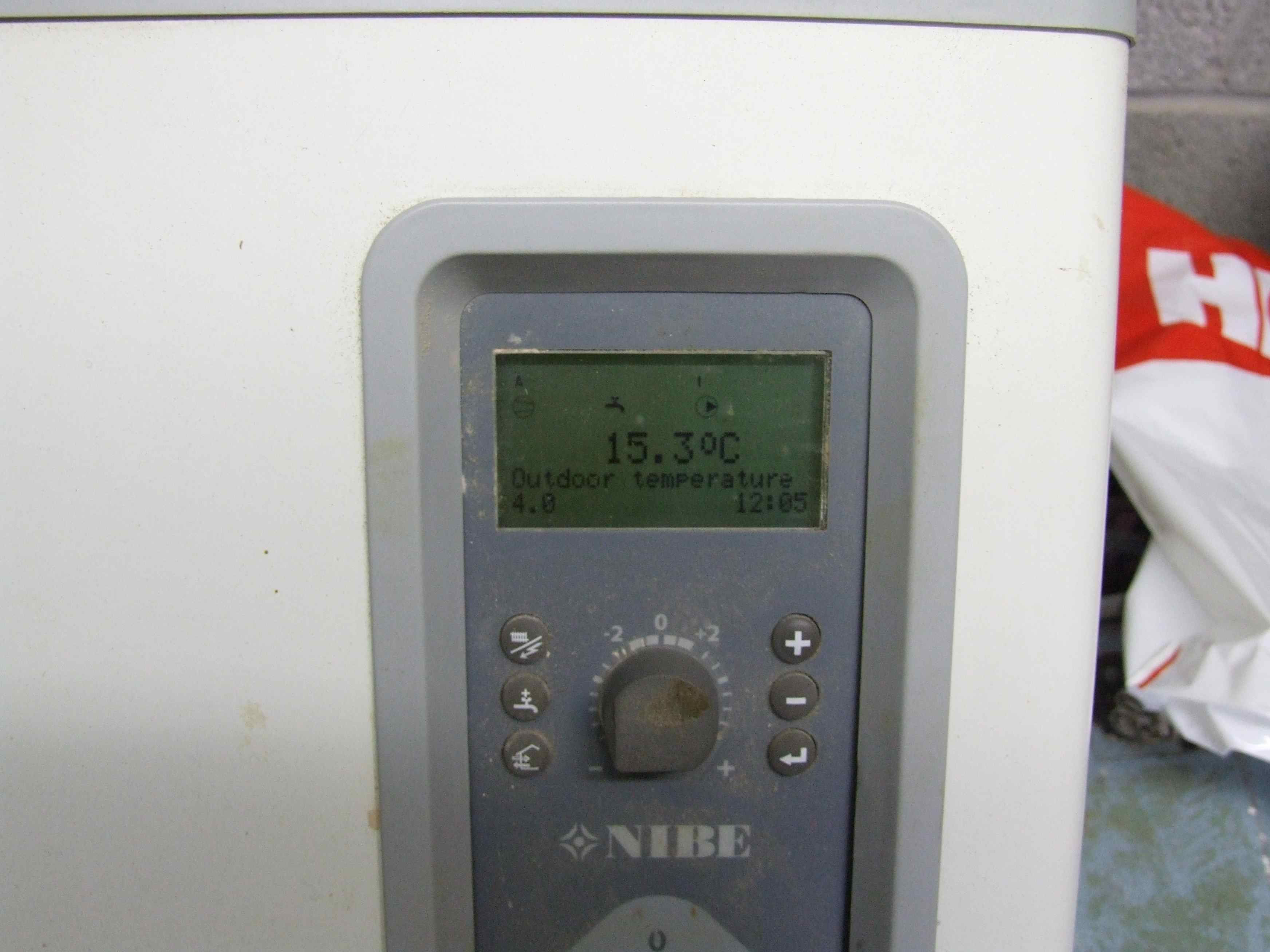 |
DSCF4063_outdoor_temp_4.0_.jpg Hot water heating | 272 K |
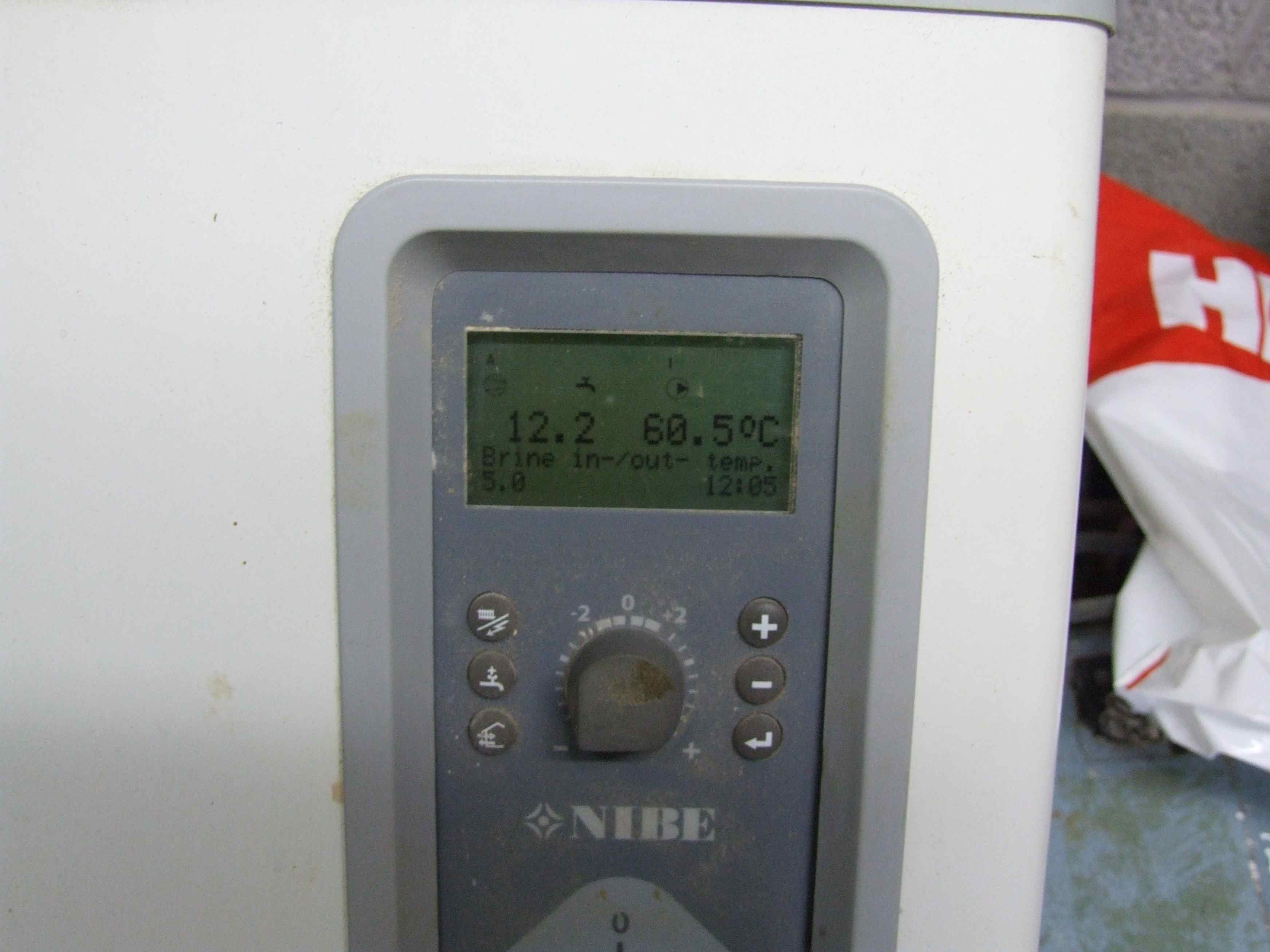 |
DSCF4064_brine_out.jpg Out door temp | 270 K |
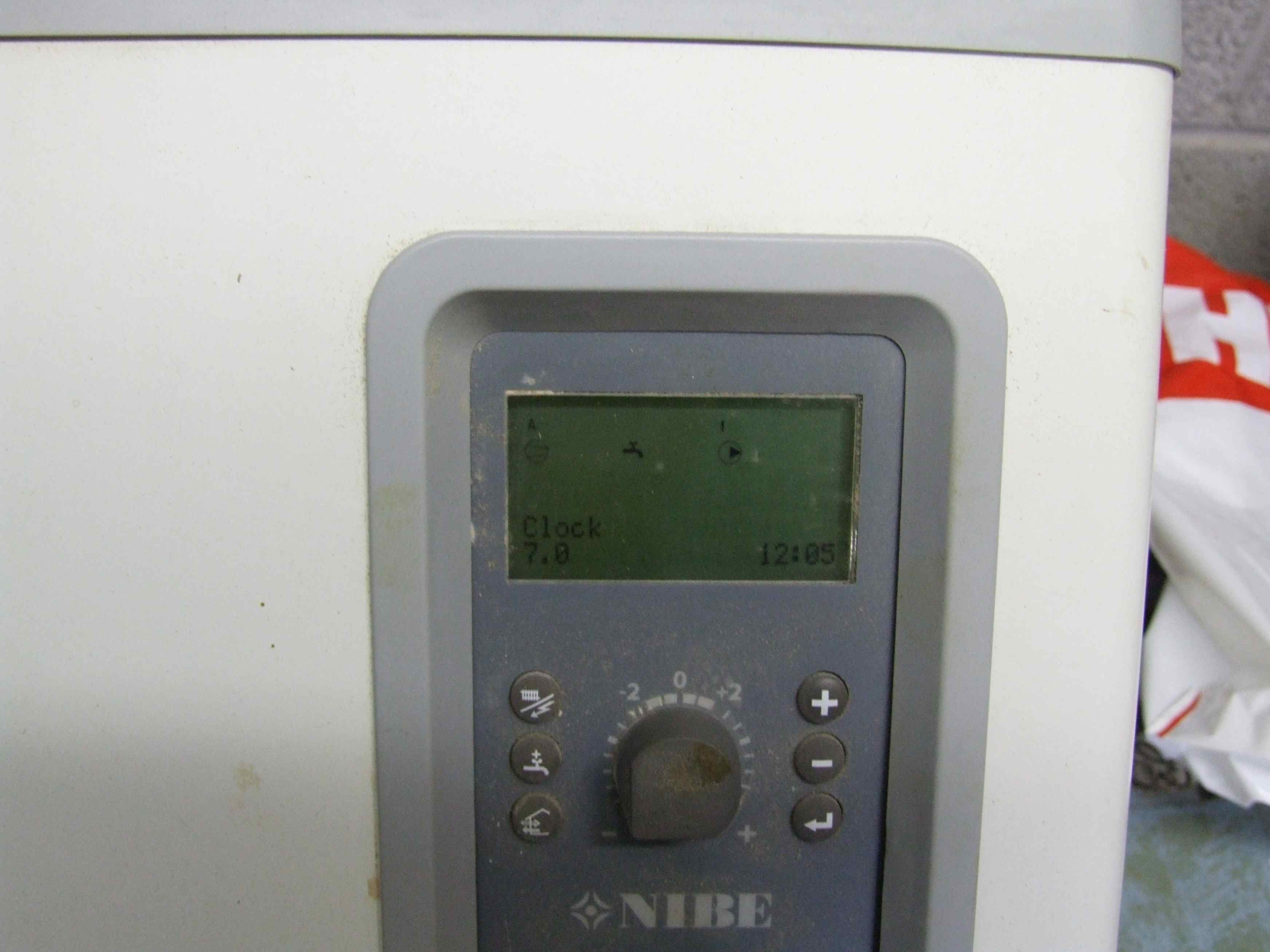 |
DSCF4065_clock_7_.jpg brine out | 267 K |
 |
DSCF4070_not_sure.jpg Clock | 252 K |